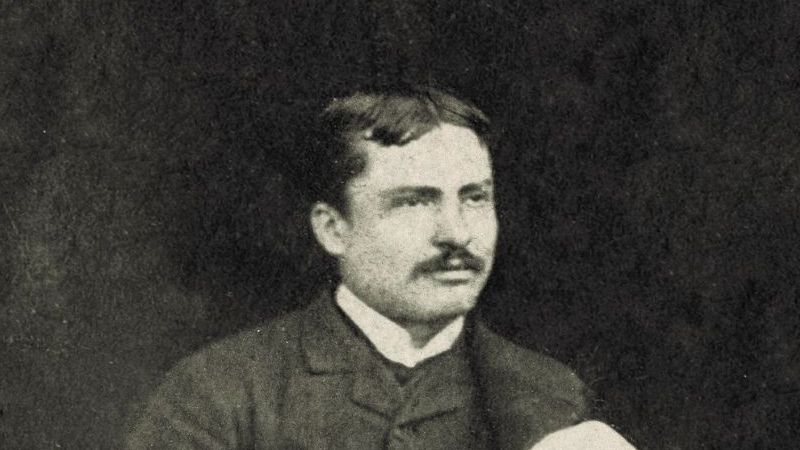
THE PASCOLI MENU: NOTES FROM THE POET’S TABLE
THE PASCOLI MENU: NOTES FROM THE POET’S TABLE
Description
Behind the verses of Giovanni Pascoli lies another, more intimate poetry: that of the table.
Letters, recollections and anecdotes evoke a world redolent of woodsmoke, freshly made pasta and country wine, where hospitality was both ritual and gesture of affection. In the dishes described in the extracts below, we glimpse not only the tastes of a poet, but the texture of everyday life in late nineteenth- and early twentieth-century Italy.
“Let’s make sure we’re home by midday on Friday. We hope – indeed we fully expect – to find a fine roast cockerel turning on the spit, with salad fresh from the kitchen garden and those luscious little potatoes done just the way that dear girl knows how to make them […]”
Livorno, August 1894: “On the last day of his sea-bathing, Genga came to breakfast with me: a light soup with chicken livers, ham, boiled fish (a magnificent spider crab), two roast cockerels. […] I returned two hours later and took all three of them first to see the animals, then to luncheon: anchovies and caviar, tortellini in broth, two gigantic fried soles, escalope with truffles in a piquant sauce, fruit, and so on…”
Castelvecchio, winter 1905: “Giuseppe Giacosa came to visit him at Castelvecchio. […] Pascoli was bustling about, busy by the hearth, helping Mariù, though he had been anxious for days… He kept a careful eye on the roast. […] Tagliatelle alla romagnola were served – Mariù’s speciality – dressed with sausage, finely diced ham, celery, carrot and onion, gently sautéed in olive oil and enriched with a fragrant, succulent tomato infusion. The wine was changed often, with frequent invitations to taste. Pascoli was keen that his own wine should be appreciated, which he had named ‘Ziegenheim’, produced from a small vineyard behind the Rio dell’Orso. Then came the meat and side dishes, followed by coffee, served by Mariù.”
Letter to the housekeeper in Castelvecchio, Attilia: “For the evening, prepare pastry using four or five eggs, to make pasta. Get some butter, kill a chicken to keep for the following day, buy half a kilo of beef, purchase a small cotechino and set it to cook gently so that it does not split and melts in the mouth. Boil seven or eight potatoes and keep them warm. That evening we shall have tagliatelle with sauce (we shall make the sauce ourselves with the chicken juices and liver and a little lean meat) and cotechino with purée (we shall prepare it ourselves with the boiled potatoes, butter and milk). The next day we shall still have the broth meat and the chicken.”
At Lemetti’s inn, at the Ponte di Campia (Castelvecchio): “Sausages grilled over the embers on thick slices of dark bread, or trout from the Serchio: in a wide pan the oil sizzles before the freshly caught trout is slipped in, well coated in maize flour. It is then dressed with vinegar and raw olive oil, scented with garlic and rosemary, and seasoned with pepper and salt – a combination Lemetti had devised, trying to anticipate the poet’s tastes.”
“When the young graduate Manara Valgimigli arrived in Messina at Pascoli’s invitation, having secured a teaching post at the ‘Alighieri’ grammar school, he found him rolling out pasta, an apron tied at his waist, skilfully wielding the rolling pin to stretch the dough as it spread wider and wider across the board.” He decanted the wine; he kneaded the bread.
Letter from G. Pascoli to the distinguished man of letters Luigi Siciliani: “My dear Gigetto, we received the mozzarelle which are our delight. It is a pastoral food, perfectly suited to an ‘Arcadian’ such as myself. We have followed your instructions to the letter; yet we have devised a method of preparation superior even to those you suggested. We eat it with piada. Once the piada is made, small squares – or ‘quadrae’ – are opened upon the hot griddle. The mozzarella becomes liquid, exquisite! Now this union of Romagnol fare and Calabrian fare shall inspire a little poem full of Italian spirit, which I shall dedicate to my Gigetto ‘Bruttasc’.”
Letter from G. Pascoli to Ida Ferrari, Barga, 31 December 1906: “Dear Signore Giuseppina and Ida, on the 28th I received a telegram from Senator F. with the happy news that the appeal had been upheld, and I dined (or rather supped) on your excellent tortellini. Had those tortellini possessed intelligence, they would have marvelled at the inscrutable design of Providence! Today is a feast day. A little one has been given to us who is yours. Devotedly and affectionately, Giovanni Pascoli.”
For more info:
Send a request for information
Processing...